What Does $72 Buy in a Baitcasting Reel?
At $72, a baitcasting reel does not buy you more features. Every reel at this price has the same list: magnetic brakes, a drag stack, some bearings. The spec sheet stops being a differentiator somewhere around $50.
What $72 can buy is one thing done properly. In our case we spent it on weight — the reel we make at this price weighs 4.8 oz (135 g). Everything else on it is ordinary. That is the whole argument, and the rest of this piece is why we think it is the right trade.
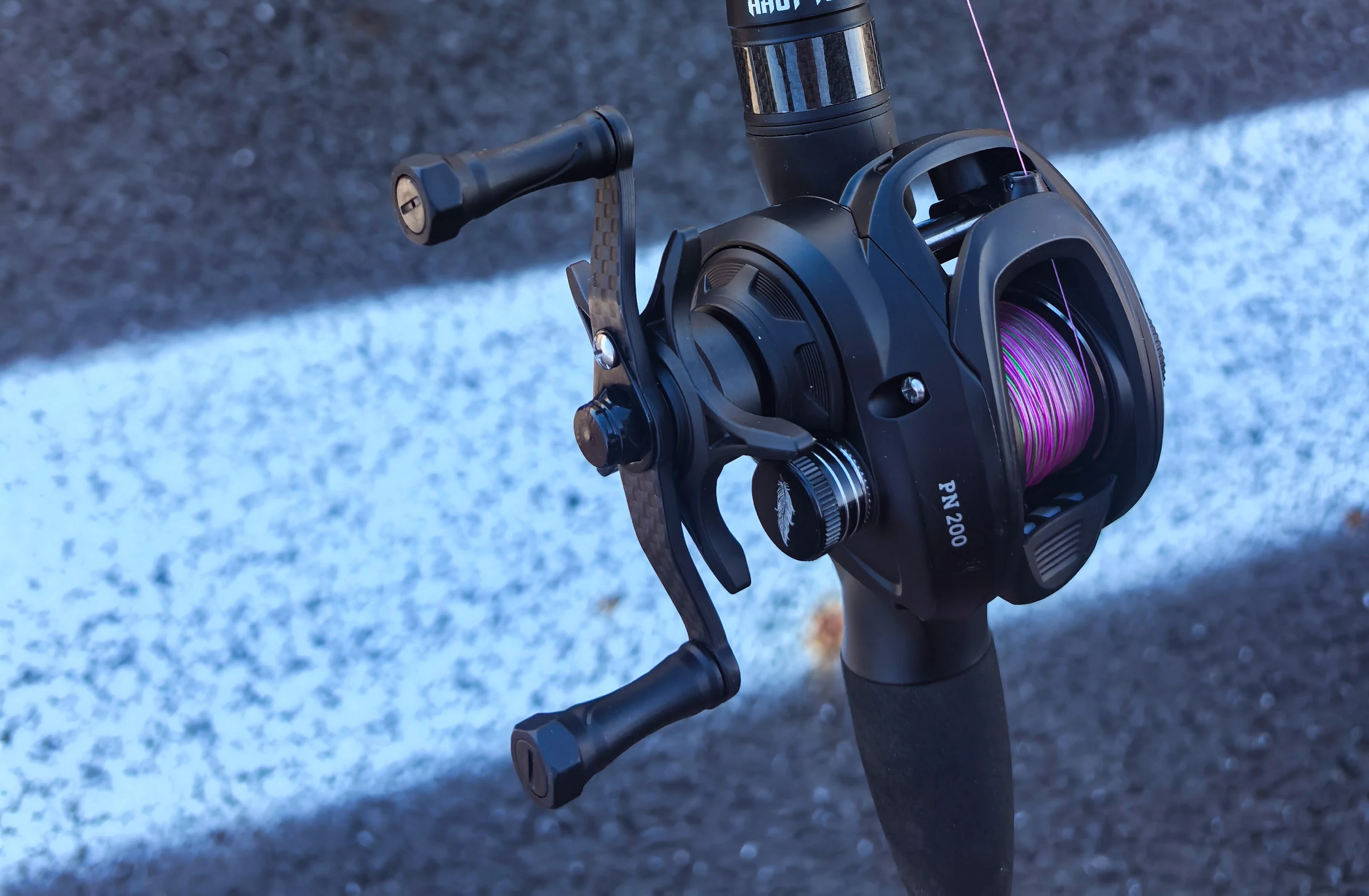
The one spec worth paying for
Gear ratio, bearing count and drag numbers are easy to print on a box. Weight is not, because it costs money to remove.
A baitcaster sits on top of the rod, forward of your hand, and you hold the rod up all day. Extra weight there shows up as wrist fatigue before it shows up anywhere else. Two ounces is not noticeable on the first cast. It is noticeable in hour four.
The trade gets sharper when the rod is short and light. A 6-foot ultralight rod has very little mass to counterbalance a heavy reel, so the whole setup feels tip-heavy and you end up gripping harder to compensate. Put a 135 g reel on it and the rod balances near the lock nut, where it should.
This is why weight is the spec we optimise for and the one we would tell you to compare first.
What 4.8 oz actually means
The Obsidian PN200 is 135 g with the spool in — 4.8 oz.
We are not going to pretend that number transforms how a reel fishes. It does not. What it changes is how long you can fish before you notice your wrist, and how well a light rod balances.
Where a light body does cost something: a 135 g frame has less material in it than a 200 g frame. It will not shrug off the same abuse. Drop it on rocks and you may find out. Treat it like what it is — a light reel for light work — and it holds up fine.
The braking system is not the selling point
Twenty positions of magnetic braking, driven by ten N42 magnets. It works, it is adjustable, and you will use three of the twenty.
That is not a criticism of this reel specifically. It is true of every externally adjustable magnetic brake on the market. Owners find a setting that suits their lure weight and casting style in the first session or two, and then they leave it there and never touch it again.
What the range is genuinely good for: it lets you crank the brakes up to maximum while you learn, and back them off gradually as your thumb gets better. That is a real benefit for someone new to baitcasting. Once you can cast, you will stop thinking about it.
General spool or shallow spool — this one matters
The PN200 ships with one of two spools, and which one you pick decides what the reel is good at. They are not interchangeable after the fact; your reel ships as the version you choose.
| Spool | Line capacity (PE) | What it is for |
|---|---|---|
| Shallow spool (BFS) — $71.99 | 0.8 PE / 110 yd · 1.0 PE / 90 yd · 1.5 PE / 65 yd | Light lures, creeks, panfish and trout |
| General spool — $74.99 | 1.5 PE / 130 yd · 2.0 PE / 110 yd · 2.5 PE / 90 yd | Standard lures, longer casts, open water |
A shallow spool holds less line, which means the spool has to spin less to let line off. Less spool inertia, less backlash on a light lure. That is the entire point of BFS — not that the spool is "better", but that a light lure can actually turn it.
If you fish 1/8 oz and under, take the shallow spool. If you fish 1/4 oz and up, or you need cast distance on open water, take the general spool. If you are not sure, the general spool is the safer default because it will cast light lures adequately — it just will not cast them as easily as the shallow one.
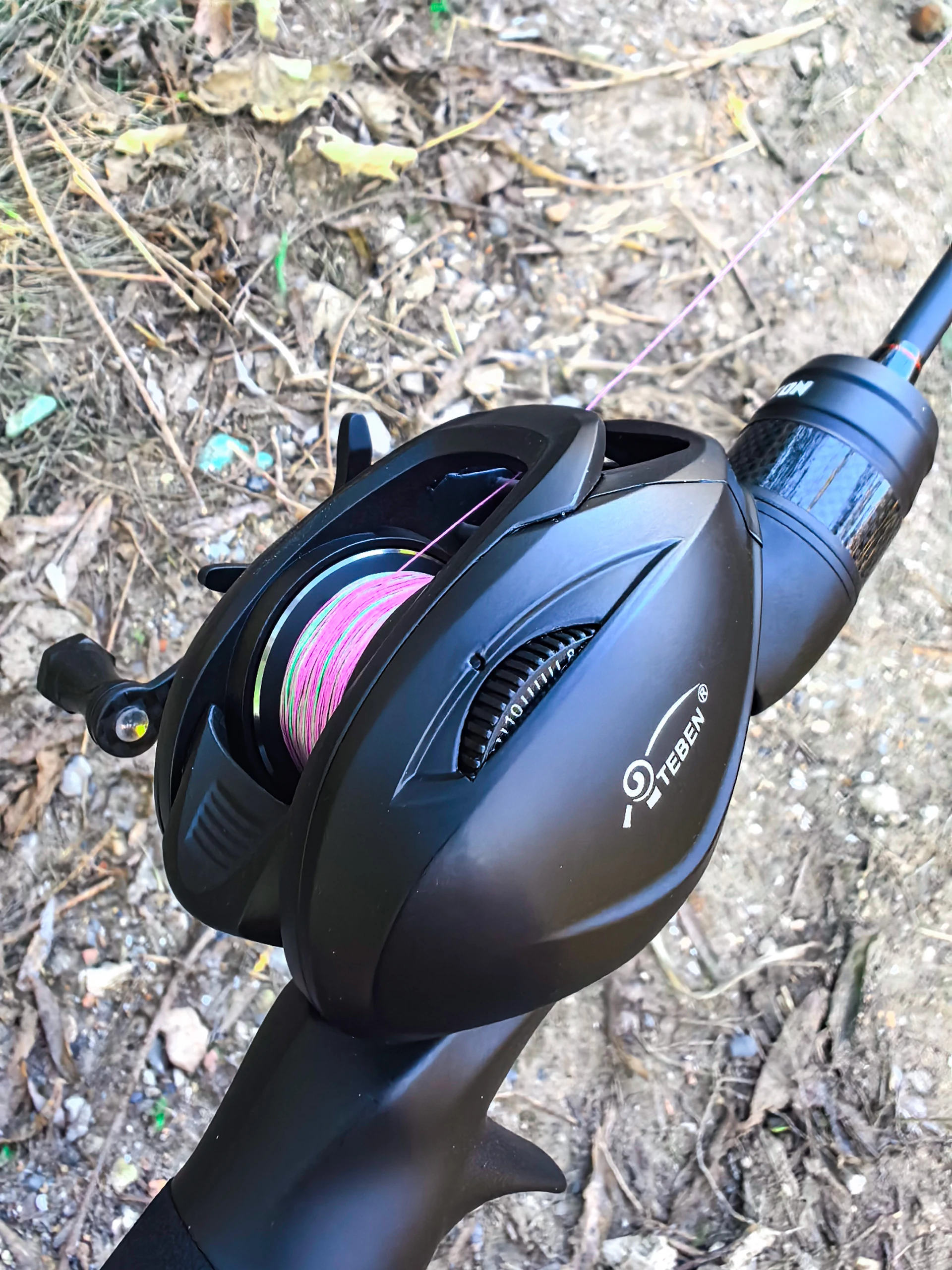
7.1:1 and 11 lb, in practice
7.1:1 is a fast retrieve. That is fast enough to burn a small swimbait and fast enough to pick up slack before a fish turns. It is not a winching ratio. If your fishing is deep cranking or dragging big jigs through heavy cover, a slower reel does that job better.
11 lb (5 kg) of maximum drag is more than a micro reel needs and less than a big-fish reel needs. In practice you will fish it nowhere near maximum, because the rods you pair with a 135 g reel are light rods that will not take 11 lb of pull anyway. The honest framing: the drag is not the limit — the rod is, and the line is.
5+1 bearings is normal at this price and nothing to get excited about. Smoothness at $72 comes mostly from how well the reel is shimmed and greased at the factory, not from adding bearings.
Where it stops
Three limits, stated plainly:
It is a baitcaster. It will backlash while you learn. Nothing about this reel changes that. If you have never used one, expect two or three sessions of picking out birds' nests before it clicks.
It is a micro reel. 135 g of frame and 11 lb of drag is not a pike or muskie tool, and it is not a heavy-cover tool. If you want to throw 1 oz spinnerbaits through weed beds, this is the wrong reel — not because it is bad, because it is small.
Line capacity is real. On the shallow spool you get 65 yd of 1.5 PE. That is plenty for a creek. It is not plenty for a fish that runs.
Who should not buy this
- You have never cast a baitcaster. Start with a spinning reel. We make one for exactly this reason and it costs less. Learn the thumb on a spinning reel, then come back.
- You fish big fish or heavy cover. The reel is not the problem; the size is.
- You want one reel to do everything. No $72 reel does everything. This one does light and precise well and nothing else.
If two of those sound like you, buy something else and we would rather you did.
If you do buy it
Set the brakes to maximum for the first session. Not because the reel is fragile — because your thumb is not calibrated yet. Tie on something at the top of your intended lure range, adjust spool tension until the lure drops slowly when you press the thumb bar, and cast with a smooth swing rather than a hard snap. Smooth beats hard every time on a baitcaster.
Loosen the brakes one at a time as your casts stop needing your thumb. Most people end up three or four positions down from maximum and stay there.
The reel arrives spooled with nothing, so you will need line. Match the line to the spool: thin PE for the shallow spool, heavier for the general one. Overfilling a shallow spool is the most common way people make a BFS reel backlashing again.
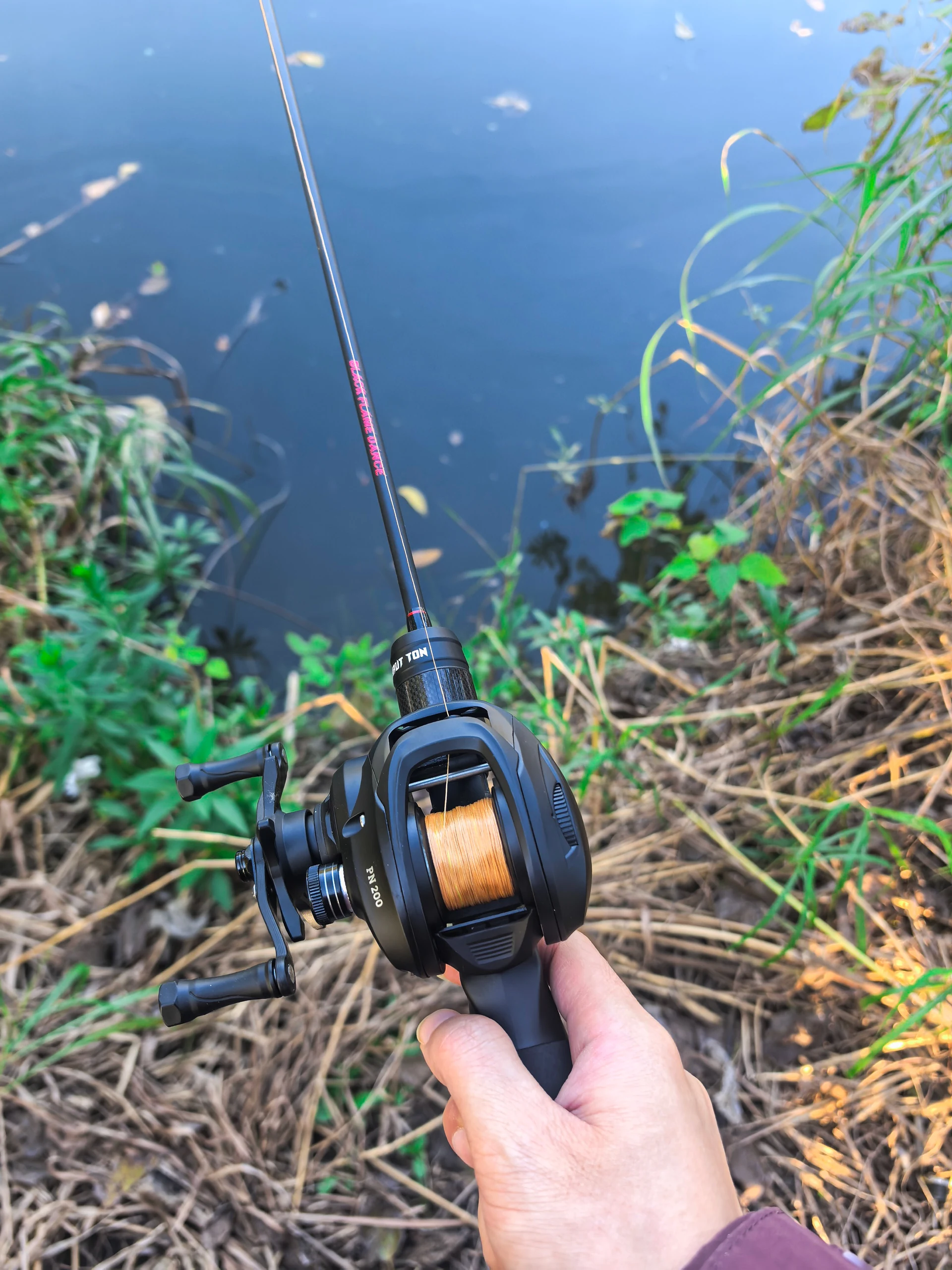
What we are actually saying
$72 here buys a 135 g carbon frame, a workable magnetic brake, one spool in the version you pick, and a 7.1:1 retrieve. It does not buy refinement you can feel in the first minute, and it does not buy durability you can rely on for a decade.
If your fishing is light lures, short rods, and a walk to the water rather than a boat ride, that is a fair trade. If it is not, spend the money elsewhere.
More on picking the right reel: how to choose the right fishing reel and spinning vs baitcasting.
See the Obsidian PN200 if you want the full spec table.